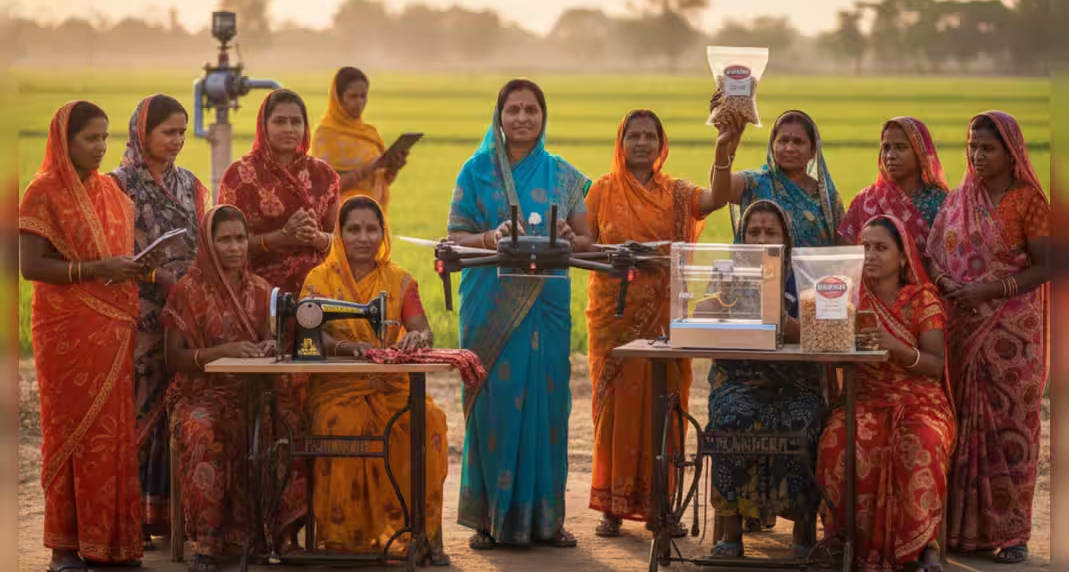
Empowering Rural Women: Government Launches Incubators Across Four States to Drive the 'Lakhpati Didi' Mission
Premier institutions like IITs and IIMs partner with the Ministry of Rural Development to transform rural self-help group ventures into scalable enterprises.
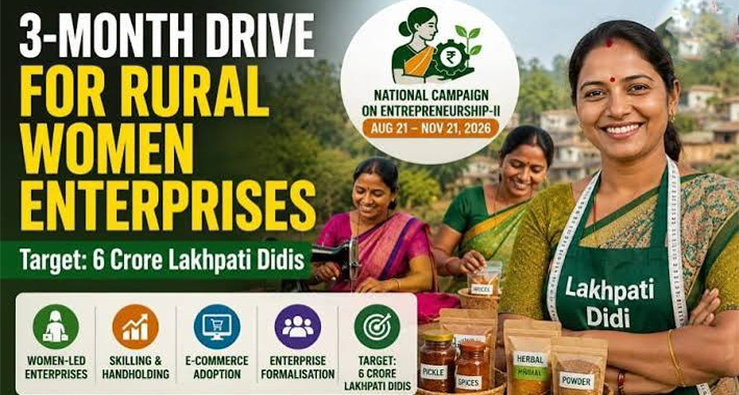
NEW DELHI — In a major boost to women-led entrepreneurship in rural India, the Ministry of Rural Development has announced plans to establish four new business incubators in Bihar, Jammu & Kashmir, Uttar Pradesh, and Gujarat. Operating under the non-farm livelihoods component of the Deendayal Antyodaya Yojana-National Rural Livelihoods Mission (DAY-NRLM), the initiative aims to scale up over 600 rural enterprises, strengthening the nation's ambitious 'Lakhpati Didi' framework.
Key Highlights of the Initiative
Premier Institutional Partnerships: The new incubators will be driven by leading academic hubs—IIT Patna (Bihar), IIM Jammu (J&K), IIM Lucknow (Uttar Pradesh), and IIT Gandhinagar (Gujarat)—to offer top-tier mentoring and technical support.
Comprehensive Enterprise Support: Selected female entrepreneurs will receive end-to-end assistance, including business strategy development, access to formal credit, technology adoption, and market linkage.
Merit-Based Selection: High-potential ventures will be selected via a competitive challenge fund, prioritizing sectors such as agri-processing, textiles, handicrafts, retail, services, eco-tourism, and digital businesses.
Proven Track Record: The expansion builds on existing success—14 incubator programs are currently operational across 13 states supporting 2,100 SHG enterprises, while completed programs in Assam, Bihar, West Bengal, and Karnataka have already empowered over 600 women-led businesses.
State-Level Incubation Cells: To ensure long-term sustainability, dedicated State Incubation Cells will be created to offer continuous mentorship, digital literacy tools, and formalization assistance.
By helping micro-enterprises transition into competitive, job-creating businesses, this initiative shifts the focus from simple income generation to building resilient, self-sustaining economic hubs managed by rural women.